
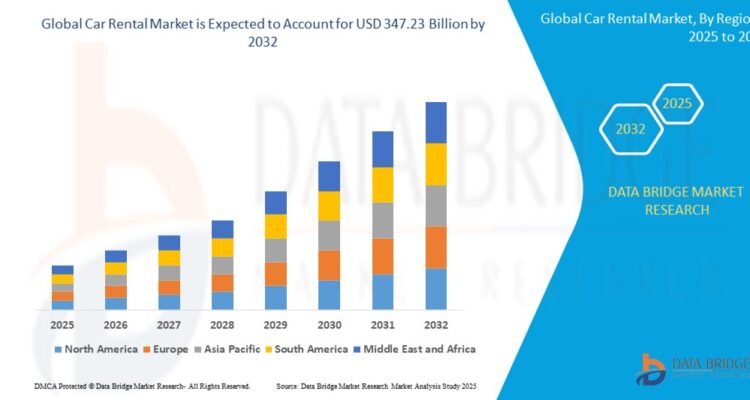
The global car rental market has become one of the most dynamic segments within the mobility and transportation ecosystem. Indeed, as lifestyles evolve, cities expand, and consumer preferences shift toward flexible travel solutions, the demand for rental cars continues to rise significantly. Moreover, the industry does not merely cater to leisure travelers; instead, it supports corporate clients, logistics firms, government agencies, and even temporary replacement vehicle needs. Consequently, car rental has emerged as a critical bridge between traditional car ownership and newer mobility services such as ride-sharing or subscription-based fleets.
Furthermore, the car rental market holds great importance because it provides consumers with the convenience of short-term access to vehicles without the heavy financial burden of ownership. In addition, it strengthens tourism economies, reduces congestion through shared mobility, and enables businesses to streamline transport requirements cost-effectively. As a result, the market remains a central pillar in the transportation ecosystem worldwide.
To begin with, the evolution of the car rental market can be traced back to the early 20th century when rental services primarily targeted business travelers. Initially, the focus was on providing limited fleets in major urban centers, particularly around airports. However, as global tourism expanded and disposable incomes increased, rental companies widened their reach beyond metropolitan hubs to include suburban areas and even rural destinations.
Over time, technology became a game-changer. For instance, online booking platforms transformed how customers interacted with rental firms. Previously, customers had to rely heavily on physical offices and phone reservations. Now, with digital platforms and smartphone applications, users can compare prices, check availability, and secure bookings in just minutes. Similarly, GPS navigation systems, telematics, and connected car technologies have made the rental experience more seamless and efficient.
In addition, customer expectations evolved considerably. Travelers began to demand not only convenience but also sustainability, affordability, and choice. Consequently, companies integrated hybrid and electric vehicles into their fleets to align with environmental goals. Similarly, loyalty programs and subscription services emerged, offering long-term rental options and customized mobility packages. This evolution reflects the industry’s adaptability to consumer behavior, technological innovations, and sustainability imperatives.
At present, several notable market trends are shaping the car rental industry. Firstly, the increasing integration of digital technologies continues to dominate. For example, mobile apps allow users to unlock cars remotely, choose from various models, and pay seamlessly without waiting at physical counters. Additionally, contactless rentals, which grew rapidly during the pandemic, have now become a permanent consumer expectation.
Secondly, there is a growing emphasis on sustainability. Governments and environmental organizations worldwide are pressuring industries to reduce carbon emissions, and car rental providers are responding by expanding their fleets of electric and hybrid vehicles. Moreover, some companies have also partnered with charging infrastructure firms to ensure accessibility for eco-conscious renters.
Thirdly, corporate clients and business travelers continue to drive steady demand, particularly in urban regions where vehicle ownership may be impractical. However, leisure tourism also fuels significant revenue, especially in popular tourist destinations, where rental cars provide the freedom to explore.
Another important trend is the rise of flexible mobility solutions. Instead of traditional daily or weekly rentals, customers now demand hourly rentals, subscription packages, and even peer-to-peer rental services. Furthermore, integration with ride-hailing and car-sharing platforms allows companies to create hybrid mobility ecosystems, ensuring greater customer loyalty.
Finally, data analytics and artificial intelligence play a central role. By analyzing consumer behavior, companies can optimize fleet utilization, predict demand surges, and adjust pricing dynamically. This not only improves profitability but also enhances the customer experience by ensuring availability when needed.
Despite its opportunities, the car rental market faces several persistent challenges. First and foremost, the market is highly competitive, with global giants competing alongside regional players. Consequently, price wars are common, often impacting margins.
Secondly, fleet management remains a considerable hurdle. Because rental companies need to balance vehicle supply with fluctuating demand, underutilized fleets can increase costs, while shortages may lead to customer dissatisfaction. Moreover, maintaining vehicles, ensuring safety standards, and complying with government regulations all add to operational challenges.
Another challenge relates to insurance and liability issues. Customers frequently worry about hidden charges or damage disputes, which can negatively affect trust. Therefore, transparent policies and customer education remain essential.
Additionally, the industry is vulnerable to economic cycles. For example, downturns in tourism or corporate travel directly reduce rental volumes. Similarly, rising fuel prices or economic recessions may hinder customer willingness to spend on rentals.
Cybersecurity also poses a challenge as more transactions shift online. Protecting customer data, financial details, and telematics information becomes vital to maintaining brand credibility. Finally, the shift toward electric vehicles, while a positive sustainability trend, also requires massive investments in charging infrastructure, staff training, and new fleet acquisition.
The scope of the car rental market is remarkably broad. On the one hand, it spans across multiple customer segments, ranging from individual travelers and business professionals to government organizations and event planners. On the other hand, it encompasses diverse rental durations, from hourly rentals for short city trips to long-term leases for corporate mobility needs.
Geographically, the market extends across nearly every region worldwide. Developed regions such as North America and Europe dominate due to their established tourism industries and corporate travel segments. Meanwhile, emerging markets in Asia-Pacific, Latin America, and the Middle East show tremendous potential because of rising disposable incomes, expanding middle classes, and surging tourism activity.
The scope also covers fleet variety. Rental providers now offer a wide range of vehicles, including economy cars, luxury sedans, SUVs, vans, electric vehicles, and even specialized fleets such as limousines. This diversification ensures that customer needs across different budgets and preferences are met effectively.
Additionally, the market scope is expanding through innovative service models. Peer-to-peer rentals, corporate fleet outsourcing, subscription-based rentals, and integrated digital platforms demonstrate how the industry continually reinvents itself. Hence, the market is not limited to short-term rentals alone but has grown into a broader mobility service ecosystem.
The market size of car rentals has grown steadily over the past decade and is expected to maintain this trajectory. While precise figures may vary depending on geography and time frame, the overall industry has already achieved substantial revenue contributions across both developed and developing regions.
Tourism remains a key contributor, generating billions in rental revenues annually. Business travel also plays a vital role, particularly in metropolitan hubs, trade centers, and corporate corridors. Moreover, as disposable incomes rise in emerging economies, increasing numbers of middle-class families are opting for car rentals during holidays and weekend getaways.
Importantly, the shift toward urbanization continues to influence market growth. With more people moving into cities, car ownership is becoming less practical due to congestion, parking costs, and environmental concerns. Therefore, rentals are filling the gap by providing access to cars without ownership burdens. Consequently, the size of the global market reflects both growing urbanization trends and lifestyle shifts.
Furthermore, long-term growth prospects are tied to electric and hybrid vehicles. Companies that successfully adapt their fleets to sustainable alternatives are expected to capture larger shares of the growing market size.
Several factors are driving the growth of the car rental market. Firstly, increasing global tourism remains one of the strongest contributors. Millions of travelers each year rely on rental cars to explore destinations flexibly and independently. Secondly, corporate travel continues to rise, and organizations prefer rental services for employee mobility because it is more cost-effective than ownership.
Thirdly, technology serves as a powerful driver. Mobile applications, GPS-enabled systems, and AI-powered platforms make renting more seamless than ever before. Additionally, innovations such as self-service kiosks, contactless payments, and smart vehicle access ensure faster and smoother transactions.
Sustainability efforts also fuel growth. Governments are encouraging the adoption of electric vehicles, and rental companies are responding by modernizing their fleets. As eco-conscious travelers prioritize green options, rental firms gain new business opportunities.
Moreover, the changing perception of car ownership among younger generations is boosting growth. Millennials and Gen Z consumers value access over ownership, preferring flexible rental models instead of committing to long-term loans.
Finally, rising disposable incomes, globalization of businesses, and expansion of digital infrastructure ensure that the industry continues its upward growth trajectory.
In conclusion, the car rental market stands at the crossroads of transformation, innovation, and expansion. While challenges persist in terms of competition, fleet management, and sustainability requirements, opportunities outweigh obstacles. With advancements in technology, growing tourism, rising corporate travel, and evolving consumer preferences, the market is poised to maintain strong growth.
Ultimately, the industry is no longer confined to traditional rental models. Instead, it is becoming an integrated mobility solution that bridges gaps between ownership, sharing, and sustainable travel. By embracing technology, prioritizing customer trust, and aligning with environmental goals, the car rental market will continue to thrive globally.